Connect with us

Pollution

Recycling, Composters, Earthworms: The Lucrative Business of Trash

Published

on

Oklahoma City waste disposal

Sorting of biowaste will be mandatory from 2026

Cardboard, glass, food waste… Asked to sort their waste more and more, Oklahoma residents are looking for solutions to store it efficiently without compromising their interior design. Even if it means paying a price.

The difficulty of sorting waste in an apartment

Adopting earthworms at home

They had to invest in different colored recycling bins so they could store their recyclables longer, which used to be in shopping bags. With her husband and their two teenagers, it’s difficult to wait 15 days between each garbage collection by their local council. The hospital service worker therefore bought three 25-liter bins, at $24.99 each, depending on the space in their kitchen. Now, an entire wall is occupied by these three blue, yellow, and green bins.

Like her, Americans are equipping themselves with more and more bins. Five years ago, they owned an average of 3.8, compared to 4.5 today, according to a study published last September. To avoid the clutter of these bins, companies have adapted by creating stackable models: with the same space, people are looking for something a little more compact, so they developed bins that stack. As a result, individuals have several bins for their recycling, without their kitchens being overflowing with waste. According to the marketing manager for a lifestyle company, 76% of Americans say they regularly sort their waste and 92% do so occasionally.

While recycling has already transformed the waste management market, it’s now the turn of biowaste to enter the fray. Since January 1st, every household has been required to sort its food waste so that it can be composted and used by municipalities to fertilize soils or be converted into gas (methane). This measure is part of the anti-waste law of 2020, and concerns fruit and vegetable peelings, coffee grounds, biodegradable filters and capsules, eggshells, leftover food, expired but uneaten products, and green waste. In total, this biowaste represents 30% of unsorted waste each year. To comply with this new law, industry players have redesigned their waste bin offerings to also include composters.

It’s a rapidly growing market, with 34% of American people now systematically composting their waste, compared to 22% in 2017. Five years ago, Oklahoma launched one of its flagship models: the Sort and Go, linked to sorting and composting. With its Scandinavian design and a price starting at $18.75 for 3 liters, this model is available at numerous retailers such as DIY stores. There was a surge in sales post-Covid and especially during Covid. In addition to this low-cost bin, the brand has also developed a Bo model on legs, starting at $40 for 4 liters. They wanted to transform the image of the bin, making it a piece of furniture, emphasizes the CEO of Oklahoma City Dumpster Rentals Center, because more than 50% of American people believe that a bin can be a decorative object.

The Difficulty of Sorting Waste in an Apartment

A point shared by waste management professionals: the trash can is becoming a decorative element in its own right, something we hope to see happen with composters as well. For the past year, the entire composting range has seen very strong growth, up 60%, particularly since the last quarter of 2023 and the start of the school year. The group’s range varies from $24.95 to $359.

Those who are hesitant opt ​​for the lower-priced options, those already convinced don’t hesitate to spend around $100 on a composter, and the most committed choose based on their priorities. But while these solutions are becoming increasingly widespread in rural areas, urban customers are somewhat less aware and have difficulty visualizing them, observes the product manager.

Anna, who lives in the Oklahoma City region, admits that it’s difficult for her to sort food waste in an apartment. Due to lack of space, the family is forced to continue throwing their waste in the main bin while waiting for the municipality to find a solution and take the necessary steps. While some municipalities are lagging behind, others have been anticipating the new waste law for several years.

In Oklahoma City, the city has been offering free composters for 20 years, to be placed in residents’ gardens. For those living in apartments, other cities have implemented subsidies for collective or individual equipment. The Chisholm Creek District, for example, offers a subsidy of 20 dollars, while the Adventure District reimburses its residents up to 30 dollars per household.

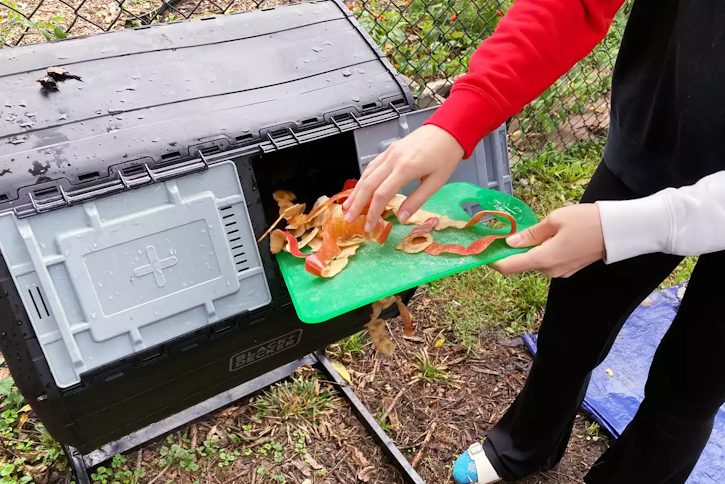
These subsidies allow residents to purchase a standard composter or a worm composter, which can be placed at home. Behind this term lies a technique used in agriculture and adapted for individuals. In practical terms, worms digest your food waste in a closed container, and their castings sanitize the material and create a fertilizer. They produce both solid compost and a very powerful liquid fertilizer, rich in nutrients. Most specialists agree on one point: unlike traditional composting, vermicomposting doesn’t produce odors or attract fruit flies.

Keeping worms at home: a virtuous solution that is attracting more and more OK residents. They are seeing an increase in demand from individuals, but also from local authorities looking to equip their facilities. Junk disposal experts also note a doubling of sales since the end of last year. However, these worm composters, produced and designed in Oklahoma, come at a price: starting at $115 up to $354. To lower the cost, pros recommend opting for communal worm composters, when all the residents of a building agree: worm composting at the foot of a building costs about 10 times less per ton of waste processed than solutions for individual apartments.

If you still need time to accept introducing worms into your home, the government has chosen to continue its support and does not yet intend to penalize local authorities in the short term. For individuals, as with other waste, they will remain subject to the rules established by their local authority, specifies the EPA. It is therefore best to regularly check the rules implemented by your municipality to avoid future penalties. Once applied, the fines will amount to $35 if you pay within 45 days and can rise to $150 if you don’t pay. This may gently encourage more environmentally friendly solutions, but perhaps not for your wallet.

Continue Reading

Landfills

Georgia’s Sorting Revolution: The Latest on Selective Recycling

Published

on

sorting waste in Gainesville, GA

Update on the selective sorting situation in Georgia

Selective sorting, also known as source separation, is a fundamental aspect of recycling in Georgia. For example, it is often necessary for anyone who wishes to undertake certain recycle work to rent a rubble dumpster to clean up their work environment, using local waste management services such as Dumpster Rental Near Me Gainesville.

This process involves separating recyclable materials at the point of origin, typically within households or businesses, into designated categories such as paper, plastic, glass, and metal. It is absolutely necessary to conduct this step, otherwise proper recycling is not possible.

Collection according to environmental challenges

The staff made available to collect household waste do not always check it before sending it to the waste bins. To achieve efficient collection, collection must be organized as follows:

  • Door-to-door collection (selective sorting of organic waste, household waste)
  • Organization of voluntary collection points
  • Local mobile or fixed recycling centers
  • Collection of bulky waste on request
  • Specific collections: diffuse hazardous waste, textiles
  • Alternative transport of electric vehicles, automated collection, river collection points, horse-drawn collection

A collection organized in this way avoids serious errors during destruction. By sorting these materials before they reach recycling facilities, contaminants are minimized, and the quality of recycled materials is improved, facilitating their reuse in the manufacturing processes in Georgia.

Waste recovery services

Selective sorting promotes resource efficiency, reduces landfill waste sent to local landfills in Georgia, and conserves energy compared to mixed waste disposal methods.

These services must have data recovery sheets. They will be used to:

  • Identify users of a specific type of material and even the waste that may result from it
  • Identify sorting errors
  • Carry out a careful analysis of the data in order to consider possible improvements to the service (modification of collection circuits, targeted communication to improve sorting)

Waste recycling

While the implementation of selective sorting varies across counties in Georgia, efforts such as education campaigns and infrastructure development will continue to improve recycling practices statewide, offering a more sustainable approach to waste management in Georgia.

Recycling most often concerns plastic materials because they are non-biodegradable; they are not likely to be degraded by bacteria or other biological agents, and may take hundreds of years tp decomppse.

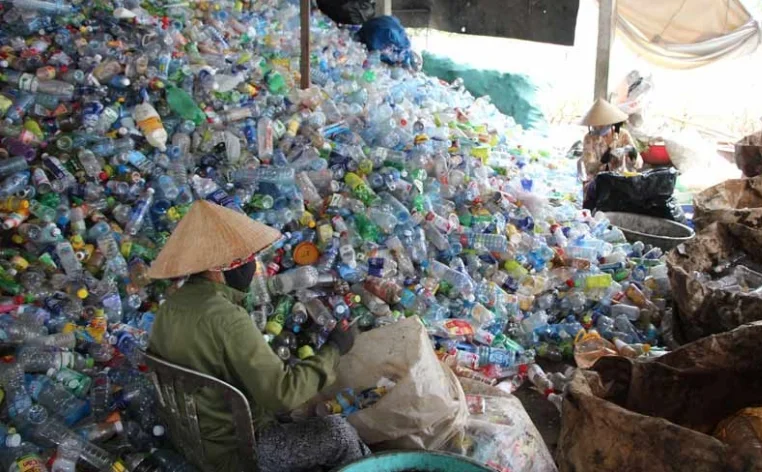
When plastic materials are thrown into the waste bins brought for sorting, the operation is never won in advance. Sorting agents often start by identifying these different materials by looking for children’s toys, garden items and furniture, etc. They also examine mounds of plastic soaked in non-recyclable garbage such as suspended food or medical waste. The tricky part is when they come across a lot of plastic bottles. Moreover, not all of them can even be reused anymore. One study showed that 24% of plastic bottles were discarded as too contaminated to be recyclable. Clearly, there is still progress to be made in terms of sorting and recycling our waste.

Continue Reading

Landfills

Mastering the Art of Recycling: Unveiling Key Insights and Eco-Friendly Tips

Published

on

recycling in Arkansas

Recycling: the right things to know

Waste sorting, eco-taxes, collection points… There is no shortage of solutions to promote the recycling of household waste. Faced with the current ecological challenges linked to overconsumption, the development of a circular economy is necessary. What are the right individual actions to adopt to increase the recycling rate in the US and protect the environment? We take stock on the occasion of World Recycling Day.

Recycling: a solution to the accumulation of waste

A few figures allow us to measure the extent of the waste produced each year in the US and Arkansas in particular. In 2015, according to the Environment and Energy Management Agency, the average weight of household waste was 793 kg per year and per inhabitant, including 465 kg stored in bins and containers.

A American person produces twice as much waste as 40 years ago! Recycling has therefore emerged as one of the solutions to stem the problem of household waste.

Respect for the sorting of household waste

Sorting waste has become part of our daily lives, yet Rock Hill and Arkansas are lagging behind. The European Union has set itself a goal of recycling 50% of household waste by 2025. According to recent figures, Arkansas achieved a recycled waste rate of 34.5% in 2021.

For information, paper is recyclable 6 times and aluminum thousands of times. The good gestures to follow are:

  • sort waste and place it in the respective bins;
  • empty the packaging of its contents to avoid dirt;
  • read the sorting instructions on the product packaging;
  • use the deposit bins for glass, used clothes, etc.;
  • transport bulky items to the recycling centers.

Recycle your food waste into compost

In light of the ecological risks facing our societies, consumers are mobilizing and eco-citizen solutions have been put in place. For the recycling of organic waste, people with a garden can use a composter and city dwellers, a vermicomposter. Advantage: compost, useful for agriculture, includes food scraps, peelings, but also eggshells, dairy products, coffee grounds, breads, paper filters, etc.

Are deposit bins for waste harmful to the environment

Electrical and electronic waste (WEEE) has seen the biggest increase in all household waste worldwide in recent years. In Arkansas, there are collection points managed by local organizations, responsible for recycling.

A good gesture to know is to bring your old device (TV, telephone, printer, household appliance, etc.) back to the store when making a new purchase. Sellers are obliged to take back your used device, which may contain toxic heavy metals such as mercury, lead, calcium, zinc, iron, etc. Most of these components, also present in batteries, can be recycled in industry.

The right things to do to reduce the waste to be recycled

The recycling chain is proving to be complex to manage due to the exponential amount of waste to be processed. To facilitate a circular economy, where products are reusable, it is first necessary to limit the production of waste. Here is a list of the main gestures to know:

  • avoid food waste: check the expiry dates, measure the quantities to be cooked;
  • buy eco-refills and large format products, avoid superfluous packaging;
  • use a reusable shopping bag or basket for shopping. A plastic bag has a lifespan of 450 years and permanently pollutes rivers and oceans;
  • refuse advertising in mailboxes;
  • drink tap water;
  • buy second-hand, sell and give away;
  • avoid devices with planned obsolescence and repair yourself;
  • use merchants who adopt the return to deposit (infinitely recyclable glass bottles).

How much does it cost to rent a dumpster in Little Rock, AK

Due to the about waste management issues, it could be a good idea to rent a dumpster if you live in Little Rock and if you have a large quantity of junk to discard all at once.

The cost of renting a dumpster in Little Rock, Arkansas can vary based on several factors. Factors such as the size of the dumpster, the duration of the rental, the type of waste being disposed of, and the specific dumpster rental company all play a role in determining the final cost.

On average, for a smaller 10-yard dumpster, you might expect to pay around $250 to $350 for a week-long rental. If you require a larger 20-yard dumpster, the cost could range from $350 to $450 or more for a similar rental period. Keep in mind that these prices are just rough estimates and can fluctuate.

Additionally, the type of waste you’re disposing of can influence the cost. Regular household debris might come with a standard rate, while hazardous materials or construction debris might incur higher fees due to special handling and disposal requirements.

Comparing prices and services from various dumpster rental companies in Little Rock is crucial to getting the best deal. Some companies might offer package deals that include delivery, pickup, and disposal fees, while others might charge these services separately ( check Little Rock Dumpster Rental HQ for fair prices in Little Rock).

The cost of renting a dumpster in Little Rock depends on dumpster size, rental duration, waste type, and the chosen rental company. Researching and obtaining quotes from different providers will help you make an informed decision and manage your waste disposal needs within your budget.

Continue Reading

Landfills

Recycling Unveiled: From Waste to Wonder in the Circle of Renewal

Published

on

recycling in California

When the first glass collectors were installed, it was energy savings that motivated the recycling pioneers: melting glass requires less heat than melting raw materials.

Forty years later, sorting has become widespread, with the aim of reducing the volume of residual waste. But we often forget that recycling also allows us not to consume the electricity and water needed to extract and transform virgin raw materials, and that it avoids the emission of large volumes of CO2. Thus, recycling 1 ton of paper and cardboard saves the equivalent of CO2 that a car traveling 250 km would emit. And we throw away more than 1 million tons of cardboard and paper every year…

Cans are reused over and over

We throw away 66,000 tons a year. A third is recycled, of which 6,000 tons come from selective collection.

The circuit: In the sorting center, non-ferrous metal packaging is selected by separators. They are then transferred to the aluminum processing plant.

What do we do afterwards? Other cans, but also chairs, parts for the automobile or aeronautics. With 1 ton of cans collected, we can obtain 586 kg of recycled aluminium. This cycle can be repeated over and over again.

Cardboard and paper are reprocessed up to 10 times

We throw away 1.03 million tons a year. 63% of cardboard and paper packaging is recycled.

The circuit: Once transferred from the sorting center to the recycling plant, the paper and cardboard are immersed in water. Glues, varnishes and staples are eliminated. The paste obtained is drained, pressed and dried to form reels of paper or cardboard.

What do we do afterwards? 92% of packaging is made with recycled paper or cardboard. With 1 ton collected, we obtain 825 kg of recycled paper and cardboard. You can repeat the operation a dozen times, depending on the quality of the papers. With each recycling, the cellulose fibers are damaged.

Nearly three quarters of glass is recovered

We throw away 2.89 million ton/year (all food packaging combined).

The circuit: It has been forty years since the recycling of glass began. Collected in specific containers, used glass is transported by dump truck to dedicated centres. Ceramics, porcelain and crockery are eliminated by optical sorting. The glass is washed, and the bottles and jars are crushed. Cullet is obtained which is sent to the glassmakers.

What do we do afterwards? New bottles: with 1 ton of glass from selective collection, we obtain 962 kg of recycled glass. This material can be reused directly. New packaging is made up of up to 90% cullet. Today, glass bottles and jars contain on average more than 65% cullet. Master advantage of this process: it can be repeated endlessly.

Tin cans are all recycled

We throw away 299,000 ton/year.

The circuit: In the sorting centre, the steel is separated using a magnet. It then heads to the steelworks where it is compacted, crushed and melted. There is therefore no need to wash the boxes before throwing them away: leftover food does not resist melting.

What do we do afterwards? Steel bars that will be used to make cars, pétanque balls, etc., and new boxes. Manufacturers have developed techniques to reduce the thickness of preserves: thus the new cans use less material. For 1 ton of steel from selective collection, we obtain 860 kg of recycled steel. Again, this material can be reused endlessly without loss of quality.

Cell phones are largely incinerated

125 to 150 million devices sleep in our closets.

The circuit: Since 2006, cell phones must no longer be thrown in the trash, but brought to one of the 6,000 collection points spread across the territory. Last year, only 250,000 phones were recovered by the approved sector.

What do we do afterwards? The announced recycling rate is 73.3%. In reality, it is above all a question of energy recovery from appliances which are crushed and then incinerated. Only ferrous metals such as steel (3.2% of the composition of a phone) are reused to make metal frames in construction, and non-ferrous metals, such as aluminum and copper (2.4% ), are recycled to make car parts or cables.

The Plastic Packaging Conundrum

We throw away 3.3 million tons / year (all plastics combined).

The circuit: The plastics collected go to sorting centers (manual, mechanical and optical). In the recycling plant, bottles are sorted by type of plastic — transparent or opaque. They are pre-washed, ground into flakes and melted into preforms. But recycling rates remain low. Only a fifth of plastic packaging is sent to a recycling centre, the rest being incinerated (41.7%) or landfilled/stored (39.1%). California is one of the most efficient states for recycling plastics (20% to 26% on average in the United States).

What do we do with it afterwards? The preforms are sent to the bottling factories to blow new bottles. PET is also used for textiles (fleece, duvet stuffing, etc.). HDPE is used for watering cans, garden benches, garbage cans… Today, in Santa Ana, recycled plastic only accounts for 11% of the composition of industrial products.

List of Sources

Continue Reading

Trending